


Reclaiming Your Rhythm: How Neurodiversity Coaching and Drum Therapy Can Support Healing from PTSD
- Deborah Newman
- 4 days ago
- 4 min read
Trauma can change the way a person experiences the world. It can affect the nervous system, emotions, relationships, concentration, sleep, and the ability to feel safe and connected. For individuals living with Post-Traumatic Stress Disorder (PTSD), healing is not simply about moving past what happened—it is about rebuilding a sense of safety, self-awareness, confidence, and connection.
Stephanie Spreeman understands this journey personally.

After surviving a serious car accident as a teenager that resulted in a traumatic brain injury and PTSD, Stephanie experienced firsthand the challenges of recovering from trauma and learning to reconnect with herself. As an accomplished percussionist, she naturally turned to rhythm as part of her own healing process.
Today, as the Founder of Neuro Clarity Now, a Certified Neurodiversity Coach, Certified Drum Therapy Facilitator, ADHD Certified Clinical Services Provider (ADHD-CCSP), and Trauma-Informed Practitioner, Stephanie combines her lived experience, professional training, and passion for helping others through a compassionate, strengths-based approach to healing.
Trauma Lives in the Body—Rhythm Helps Us Reconnect
Trauma does not only affect memories and thoughts; it can also impact the body's stress response system.
Individuals living with PTSD may experience:
Hypervigilance
Anxiety and chronic stress
Difficulty regulating emotions
Sensory sensitivities
Feelings of disconnection or numbness
Challenges with concentration and executive functioning
Sleep disturbances
Difficulty maintaining routines and daily responsibilities
Drum Therapy offers a powerful way to engage both the body and the mind. Through repetitive rhythm, movement, breathing, and sensory engagement, participants are invited into a structured experience that promotes presence, self-awareness, and connection.
Research on music and rhythm-based interventions suggests that group drumming and rhythmic activities may support:
Reduced feelings of stress and anxiety
Improved mood and emotional expression
Increased feelings of social connection and belonging
Enhanced mindfulness and present-moment awareness
Opportunities for healthy physical release of tension
Improved emotional regulation
Drumming is not about musical ability—it is about creating a safe space to express, release, listen, and reconnect.
Finding a Voice Beyond Words
One of the challenges of trauma is that experiences and emotions can sometimes be difficult to put into language. Many individuals with PTSD describe feeling as though they carry emotions that are too complex or overwhelming to explain.
A drum can become a voice.
A strong beat can express anger, frustration, grief, or fear. A steady rhythm can represent grounding and stability. A shared rhythm with others can create a sense of trust, connection, and community.
Within a Drum Therapy session, there is no pressure to tell a story before someone is ready. Healing can begin with simply being present, holding a rhythm, and realizing that one's voice matters.
The Role of Neurodiversity Coaching in Trauma Recovery
PTSD often affects executive functioning, attention, emotional regulation, sensory processing, and the ability to navigate everyday demands.
Neurodiversity Coaching provides a strengths-based, individualized approach that helps people better understand their nervous system and develop practical tools for daily life.
Through coaching, individuals can learn to:
Recognize personal stress responses and triggers
Develop routines that increase feelings of safety and predictability
Build emotional awareness and regulation strategies
Strengthen self-compassion and confidence
Improve communication and self-advocacy skills
Identify personal strengths and pathways toward growth
Improve executive functioning and organization
Create sustainable coping strategies
The goal is not to erase a person's experiences—it is to help them understand themselves more deeply and build a life that feels meaningful, manageable, and aligned with their strengths.
The Healing Power of Community
Trauma often creates isolation. People may withdraw from activities they once loved, avoid social situations, or feel that others cannot understand what they have experienced.
Drum circles create a unique environment where individuals can participate at their own pace while still being part of something larger than themselves.
Everyone has a place in the circle.
There is no competition, no expectation of perfection, and no need for previous musical experience. The simple act of creating rhythm together can foster trust, connection, joy, and a reminder that healing can happen in the presence of others.
Community support can become an important part of recovery, helping individuals feel seen, heard, and understood.
A Journey of Healing Through Compassion and Rhythm
Stephanie Spreeman's work is built on a powerful belief: every person has an inner rhythm that remains present, even after trauma.
By combining Neurodiversity Coaching with Drum Therapy, Stephanie offers individuals living with PTSD a creative and supportive pathway to reconnect with their bodies, understand their nervous systems, develop new coping strategies, and rediscover their strengths.
Her approach is especially meaningful because it comes from both professional expertise and lived experience.
Stephanie knows that recovery is not a straight line, and she understands the courage it takes to begin again.
Whether someone is navigating trauma from an accident, military service, loss, childhood experiences, medical challenges, or other life events, the journey toward healing can begin with one simple step.
One breath.
One connection.
One heartbeat.
One beat of the drum.
Because even after trauma, your rhythm is still there—waiting to be heard.
Meet Stephanie Spreeman
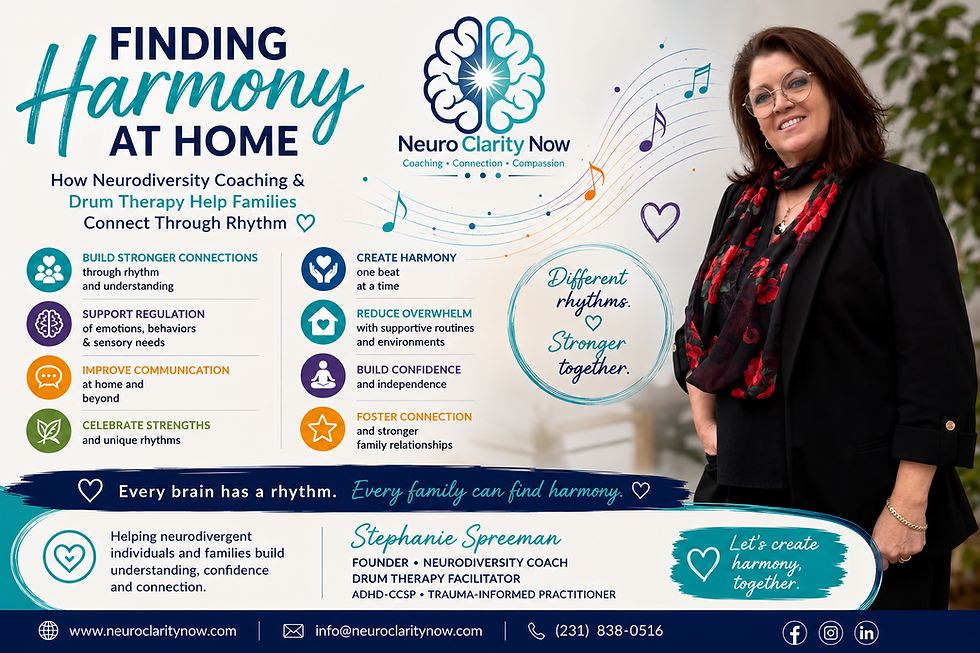
Stephanie Spreeman is the Founder of Neuro Clarity Now, where she helps neurodivergent individuals, trauma survivors, and families gain clarity, confidence, and practical strategies for success.
Her unique approach combines:
Neurodiversity Coaching
Drum Therapy
ADHD Support
Executive Function Coaching
Emotional Regulation Strategies
Trauma-Informed Practices
Strengths-Based Development
Stephanie's mission is to help individuals understand their unique brains, build on their strengths, and create lives that reflect their authentic potential.
Ready to Begin Your Healing Journey?
If you or someone you love is living with PTSD, anxiety, emotional regulation challenges, ADHD, or other neurodivergent experiences, support is available.
Healing does not require perfection. It begins with connection, understanding, and small steps forward.
Contact Stephanie Spreeman
Stephanie Spreeman, Founder & Certified Neurodiversity Coach, Certified Drum Therapy Facilitator, ADHD Certified Clinical Services Provider (ADHD-CCSP) Founder, Neuro Clarity Now
Schedule a complimentary Discovery Call to learn how Neurodiversity Coaching and Drum Therapy can support healing, resilience, emotional regulation, and personal growth.


Comments